You’re not exactly stuck in traffic when your day starts with a quick boarding call at Kewalo Basin and a catamaran nosing into bright blue water. You grab a shaded seat or head upstairs for the wind, hear the safety talk, and scan the horizon as the city slips behind you and the first blow might rise from nowhere. Then the ocean goes quiet in a way that gets your attention.
Key Takeaways
- Boarding is organized and calm, with a safety briefing, assigned seating, and quick departure from Kewalo Basin toward whale-viewing waters.
- The ride feels steadier than a mono-hull, especially on a stabilized catamaran, though upper decks get more wind, spray, and motion.
- On the water, expect an easy rhythm of scanning the horizon, listening for crew calls, and waiting through bursts of excitement.
- Sightings often begin with a tall blow or glossy back, followed by tail flukes, fin waves, tail slaps, or sudden breaches.
- Bring layers, sunscreen, sunglasses, and motion-sickness remedies, and choose morning trips with center or lower-deck seating for more comfort.
What Does a Waikiki Whale Cruise Feel Like?
STEP aboard at Kewalo Basin, just minutes from Waikiki Beach, and the cruise quickly settles into an easy rhythm. After a brief check-in and safety talk, you climb the custom catamaran and choose sun or shade. The crew spreads everyone along both rails, so your view stays open and calm. Then you scan the blue water off Oahu for the telltale signs of humpback whales: a tall blow, a glossy back, a tail lifting above the surface. Some sightings appear close. Others stay distant, which somehow adds suspense. You hear wind, spray, and excited whispers instead of chaos because the crew keeps everything respectful and unhurried. Sunglasses, sunscreen, and a phone strap help. So does patience. Wild whales don’t work on your schedule. Most winter departures from this harbor focus on humpback whales during Hawaii’s peak migration season.
Will You Feel Seasick on a Waikiki Whale Cruise?
You’ll usually feel pretty steady on a modern Waikiki catamaran, since today’s stabilized boats cut much of the side-to-side roll that can turn a whale watch into a stomach test. If you know you’re motion-sensitive, you can stack the odds in your favor with medication before departure, a seat near the centerline, and your eyes on the horizon when the captain turns toward a spout. A light jacket, a phone strap, and calm crew guidance also help you stay comfortable when the swell lifts, the spray flicks across the rail, and the whales steal the show. Even on Oahu, seasick symptoms are usually milder on a catamaran than many first-time whale watchers expect.
Seasickness Risk Factors
Although no boat ride comes with a zero-percent chance of nausea, a Waikiki whale cruise on a catamaran is usually one of the gentler options. On Oahu Whale Watching trips, you’ll often ride a stable platform, and Living Ocean’s double-decker with Lokahi’s SeaKeeper cuts roll more than a mono-hull. You also reach whale areas quickly from Kewalo Basin, so you spend less time in the slap and sway of open chop. Open-air horizons help your balance, and crew members keep sightings smooth with no sharp turns. Still, your sensitivity matters. If motion sickness finds you easily, you may still feel queasy, especially on windy days when winter seas get lumpy. In calm January through March conditions, though, this setup is one of the best. For an even smoother start, aim for whale watching check-in a little early so you can settle in before departure without rushing.
Comfort Tips Onboard
A few smart onboard habits can make an already gentle Waikiki whale cruise feel even easier on your stomach. Living Ocean’s double-decker catamarans use SeaKeeper stabilization, so you’ll feel steadier than you’d on smaller boats around Oahu. If motion sickness tends to find you, take dimenhydrinate or meclizine about an hour before departure. Bring water, a phone strap, and a light snack. Check in 15 minutes early, then dress in layers, because cool wind and stray spray can sneak up on you. For the smoothest ride, book a morning trip and choose a seat near the centerline or on the lower deck. You’ll also notice the crew handling turns and speed changes with care, which helps first-timers, families, and uneasy stomachs stay happy too. On many Honolulu whale watching tours, you can also expect a brief safety orientation and helpful guidance from the crew before you head out.
Still comparing Catamaran Whale Watching Waikiki: What It Feels Like?
Ask for tour ideas, hotel suggestions, or a simple trip plan that combines both.
Trip Helper
How Early Should You Arrive for Waikiki Whale Watching?
Usually, it’s smart to get to Waikiki whale watching at least 15 minutes before departure so you can check in, stash small items, and step aboard without that rushed harbor scramble.
If you want the trip to start smoothly, think beyond the minimum. Your early check in helps, especially at Kewalo Basin, where parking strategies matter. On weekends, give yourself 30 to 45 extra minutes because lots fill fast and drop-off can save time. Arriving sooner gives you a shot at shaded spots or front-row seats on the custom catamaran. That means views when you scan for a blow, a back roll, or a tail lift. If seasickness prep matters to you, add another 10 to 15 minutes for medication and a phone strap. Before you leave, it helps to confirm Kewalo Basin Harbor directions so your arrival feels easy and on time.
What Happens During Boarding and Safety Briefing?
Once you’ve checked in at Kewalo Basin Boat Harbor, the boarding process moves fast, so it helps to arrive at least 15 minutes early and give yourself extra cushion for weekend parking and harbor bustle.
From there, the crew walks you through the boarding logistics with ease. You’ll get a safety orientation covering bag storage in dry lockers, safe movement on deck, and where the restrooms are. They also explain whale-spotting calls, so when they announce direction and distance, everyone can look without crowding. Rules stay simple: keep calm, skip drones, use a phone strap, and move steadily even with Lokahi’s SeaKeeper system. The eco guidelines matter too. You’ll watch respectfully, give calves extra caution, and remember sightings aren’t guaranteed before the lines loosen. During this departure guide, the crew also helps set expectations for an organized Honolulu Harbor whale watching experience before the catamaran heads out.
Where Should You Sit on the Catamaran?
With the safety talk behind you, the next smart move is picking a seat that matches how you want to watch the water. If you want sweeping rail views and the best photo angles, head for the upper deck. You’ll get clear 360-degree sightlines, though wind and spray can sneak up fast, so bring a light jacket.
If you’d rather have steadier footing, choose shaded seating near the rail on the main deck. You still get views without baking in the sun. If motion bothers you, sit midship near the SeaKeeper area, where the ride feels calmer. Arrive 15 minutes early, since parking and check-in can eat time. Then follow the crew’s seating calls so the catamaran stays balanced and nobody crowds one side for safety and better photos. For first-time adventurers, choosing a seat early can make the whole whale-watching experience feel more relaxed and enjoyable.
What Whale Signs Will You Notice First?
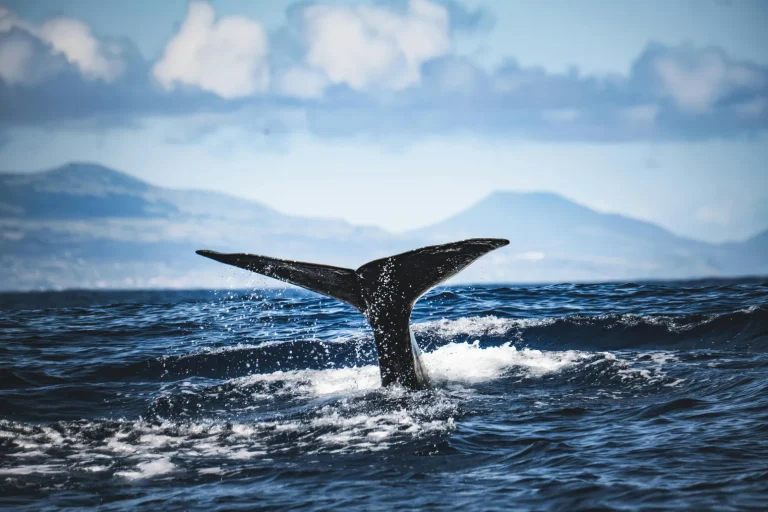
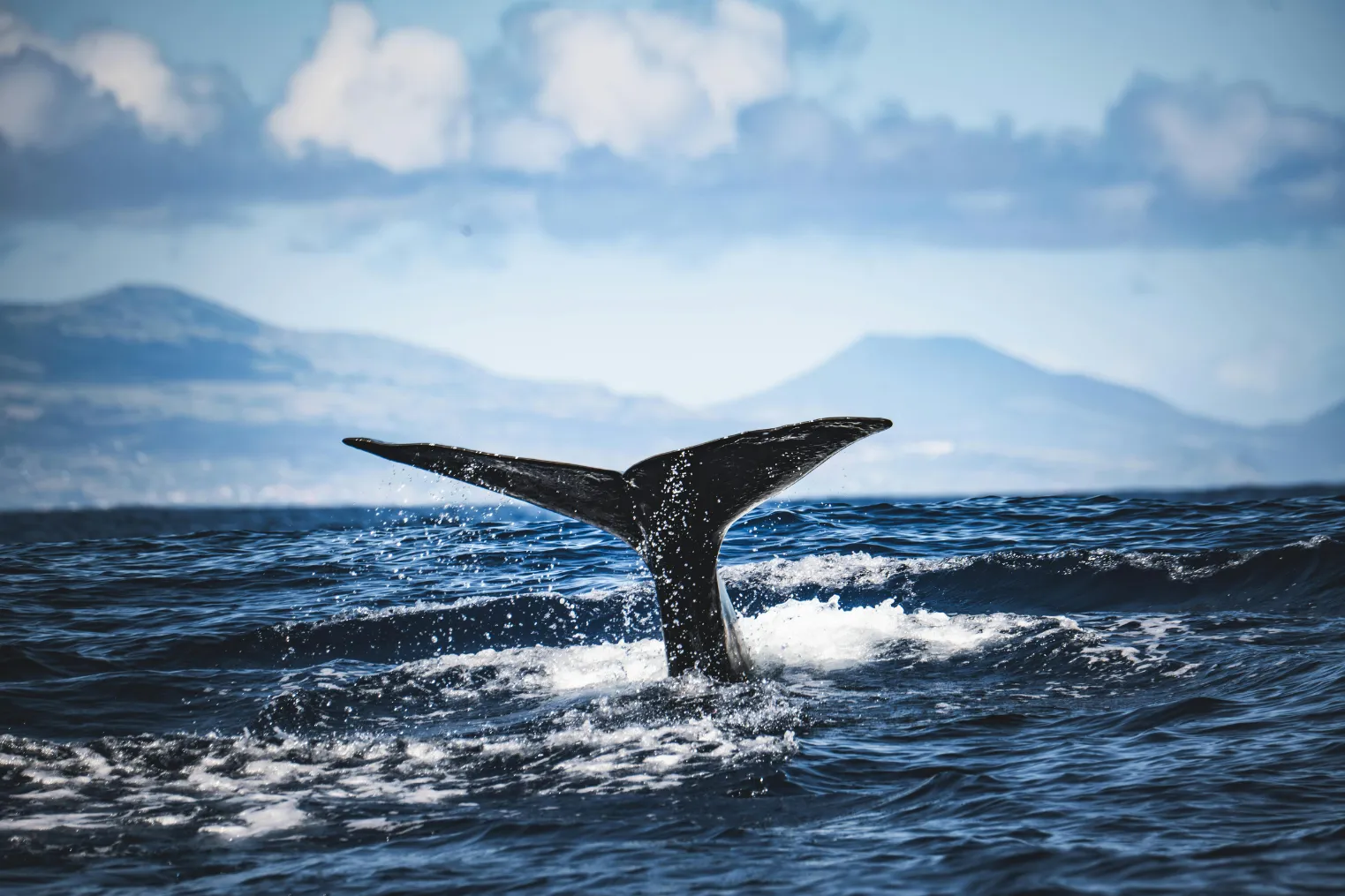
You’ll usually spot the tall, misty blow first, rising several meters above the water like a quick puff of smoke from the horizon. Then you’ll catch a smooth black back roll at the surface, and if you’re lucky, a tail lift with the flukes clear of the water means the whale’s heading down for a longer descent. Listen for the crew’s calm callouts on distance and direction, because that little heads-up helps you get a better view without everyone piling onto one side of the boat. On some trips, you may also witness a dramatic breaching behavior, when a whale launches part of its body out of the water before crashing back down in a huge splash.
First Surface Clues
The giveaway usually starts as a plume. You spot a tall, misty spout rising several meters above the water, a mysterious blow that appears before any body does. Then your eyes catch a shadowy silhouette. A smooth, dark back rolls through the surface with no dramatic dorsal fin, and the crew quietly nods because that shape often means humpback. Sometimes you hear the sighting first. A low boom or sharp slap carries across the water and turns every head on the catamaran at once. If whales are social or a calf is nearby, you may notice quick little splashes or a pectoral wave close to the boat. Then comes the soft exhale, and suddenly the whole ocean feels occupied by something huge and very alive. Every so often, a whale may even rise into spyhopping behavior, lifting its head above the waves as if it is taking a curious look around.
Blow Back Tail Signs
Keep your eyes moving, and the first giveaway is often a tall, misty blow rising several meters above the water. From the shaded deck, you’ll spot misty blows first, then smooth, dark rolling backs as a whale surfaces and rounds forward. If it dives deeper, fluke flashes can appear for just seconds, like a quick wave goodbye.
- Your pulse jumps when the crew calls a direction.
- You scan both sides because whales vanish fast.
- A hollow tail slap carries across the water.
- Everyone leans, points, and suddenly laughs.
The crew spreads you out and calls distance and bearing, because one whale may surface close, then fade far off. Stay patient. Keep scanning. The blow, back, or tail could pop anywhere. Sometimes a sudden full-body breach can erupt without warning, especially when whales are active near the surface.
Which Whale Behaviors Might You See?
Often, the first clue that humpbacks are nearby is a tall, misty blow rising several meters above the water, like a quick puff of smoke that gives away their position from a distance.
You’ll often spot a smooth black back rolling up before a dive, then maybe a lifted tail or full flukes hanging for a few photogenic seconds. At the surface, you might catch pectoral fin waves and hear sharp tail slaps from the boat. Breaching frequency varies, so a full launch can feel like a jackpot. If calves appear, you’ll usually see softer rolling and close mother-calf pairing. Those quieter moments can hint at social structure, while feeding behavior is less likely off Waikiki’s usual winter routes. That’s still plenty to watch. Hawaii’s winter humpback season is when these behaviors are most commonly seen on tours.
How Do Crews Watch Whales Responsibly?
Because whale watching works best when nobody plays chase boat, good crews rely on distance, patience, and smooth handling instead of rushing in for a closer look. You feel that calm approach right away. During passenger communication, crew members point out blows and tail lifts, then guide you around the deck so one rail doesn’t crowd the whales. If calves appear, they give families extra room. With stabilization technology like SeaKeeper, the catamaran holds steadier, so you don’t lurch through every swell or force sudden turns. In Hawaii, responsible crews also respect safe distances from whales, especially when mothers and calves are present.
- You hear clear safety rules.
- You move slowly and stay balanced.
- You watch for back rolls and fin waves.
- You leave if behavior changes.
That restraint feels respectful. It makes each sighting feel earned.
What Should You Bring for Whale Watching?
You’ll want a few smart basics before you step onto the catamaran, because Waikiki’s winter sun still hits hard and ocean spray has a way of finding you. Bring sunglasses, a hat, reef-safe sunscreen, a water bottle, and a phone or camera with a secure strap so you’re ready when a whale suddenly breaks the surface. A light layer and motion-sickness meds can save the day in choppy water, and you’re better off leaving drones, glass bottles, and bulky beach bags at home. Wearing quick-dry clothes and non-slip shoes can also make whale watching in Hawaii more comfortable and safer on a wet deck.
Must-Have Essentials
While the trade winds can make the deck feel cooler than the beach, a few smart items will make your whale watch smoother from the first swell to the ride back to Waikiki.
- Pack polarized sunglasses and reef sunscreen so the water stays brilliant, your photos stay sharp, and Hawaii’s reefs get a little respect.
- Bring a hat, refillable water bottle, and light layer. Spray happens, breezes surprise you, and thirst sneaks up fast.
- Clip on a phone tether or camera strap, then add extra batteries or a small power bank. The best breach always seems to happen when your hands are full.
- If motion gets you, take meds before boarding and stash ginger chews. Leave drones, glass, and bulky bags behind at the hotel.
These must-have items help you stay comfortable, prepared, and focused on the whales instead of the weather or your gear.
Comfort And Protection
Often, comfort on a whale watch comes down to a few simple things you can grab before you leave the hotel. Bring sunscreen, sunglasses, and a hat for sun protection. Waikiki light bounces off the water, and shade options stay limited even on the double decker catamaran. Wear layered clothing, too. A light jacket or long sleeve helps when the breeze turns cool and the deck rolls a bit, even with SeaKeeper smoothing things out. Pack a clipped water bottle and a phone strap, then tuck valuables into the boat’s dry storage. Skip drones, glass bottles, and bulky beach bags since space stays tight. If you are heading out with younger passengers, best ages and realistic expectations can help you pack a little extra patience along with snacks and sun protection. Arrive 15 minutes early and allow extra time for harbor parking, so you can settle in before orientation and the first spouts appear.
When Should You Book a Waikiki Whale Cruise?
Because whale season in Waikiki runs from Jan. 2 to Mar. 31, it pays to book your cruise as early as you can, and March dates go fastest. Book soon after you arrive, not last minute, so you’ve got room to reschedule if weather turns moody.
Book your Waikiki whale cruise early, especially in March, so weather shifts still leave room for a second shot.
- Pick the best timing with a morning departure for calmer water and cleaner photo light.
- Reserve early for weekends, holidays, and the seats you want on limited-capacity boats.
- Arrive 15 minutes early at Kewalo Basin and leave extra parking time, especially on weekends.
- If comfort matters, choose Living Ocean’s stabilized catamaran and ask about group discounts.
Kewalo Basin sits directly makai of Ward Village, where public open spaces help connect the neighborhood to the waterfront.
Book earlier in your stay, and you’ll keep hope alive for another try if whales play coy again.
Frequently Asked Questions
Is Whale Watching Suitable for Young Children or Infants?
Yes, you can bring young children or infants if you plan for motion tolerance, viewing distance, and nap logistics. You’ll want early arrival, sun protection, light layers, and a steadier boat to keep everyone comfortable.
Are Restrooms Available on the Catamaran?
Yes, you’ll find onboard restrooms on the catamaran. The restroom location is accessible from the main deck, though privacy concerns matter because they’re compact marine facilities. You can ask crew about the maintenance schedule and timing.
Is the Catamaran Wheelchair Accessible?
Yes, you can usually expect wheelchair boarding with crew help, accessible seating, and decks, though ramps availability and restroom access can vary by vessel, so you’ll want to call ahead and request accommodations when booking.
Can You Bring Your Own Food and Drinks Aboard?
Yes, like packing a breeze, you can bring light snacks and sealed water, but leave packed coolers behind. Follow snack restrictions, skip glass and drones, and check the alcohol policy; you’ll want low-odor items only.
What Happens if No Whales Are Seen?
If you don’t see whales, you’ll usually get a refund policy option, reschedule, or voucher. You still enjoy alternative activities like seabird spotting, ocean views, and wildlife education from the crew, so your trip’s worthwhile.
Conclusion
By the time you step back onto the dock, you’ll know this isn’t just a boat ride. You’ll remember the salt on your lips, the wind in your shirt, the sudden hush when a blow appears ahead. You arrive early, pick your seat, hold the rail, and scan the horizon. Then the ocean answers. Not with noise, but with flukes, fins, and one huge breath. That’s the pull of a Waikiki whale cruise.